Your instrument holds the reading. The question is how it reaches the quality record.
Between the memory of a balance, a pH meter or a titrator and your quality record, a manual step often survives: a printout, a display read, a file moved by hand. It survives on connected instruments too, whenever the handover is taken as given rather than checked. That step is where attributability breaks, because the record is not controlled at the moment it is created.
We sign the reading on the gateway at the point of capture, producing a Trace. The signing key is generated on the gateway and never transmitted, so a valid Trace can only have been produced by that gateway's own key. Capture is read-only: the instrument is not driven, reconfigured or updated, and its qualified state is untouched. Signatures by your people stay in the system where you sign today, under your own Part 11 or Annex 11 controls.
Does someone retype the number?
We do not start from a list of instruments. We start from the hop between the instrument and your record, and from the manual step that still sits in the middle of it.
A printout is read and typed in
Balances, pH meters, Karl Fischer titrators, most benchtop instruments that already print what they measure.
A display is copied to a logsheet
Fridges, incubators, stability chambers, differential pressure gauges. The clipboard on the door is a GxP record.
A value is copied out of a file
Spectroscopy (Raman, FTIR, UV/Vis, NIR), TOC analyzers, osmometers. We take the export the instrument already produces.
No one retypes it
Chromatography such as Empower or ChemStation is usually already integrated, and we will tell you so. We bridge it only if you want one record across the whole bench.
Not sure which of your readings qualify? That is the first thing we work out together.
Documentation your QA qualifies against intended use.
- Standard layer documented for GAMP 5 assessment, categorization completed by your team
- Site-specific URS, Risk Assessment and Requirements Traceability Matrix
- Full IQ/OQ/PQ protocols tailored to your environment
- Vendor Qualification Package ready for execution by your QA or the CSV resource you already use
- Every Trace stays queryable and independently re-verifiable, a record for your quality file
The test we invite you to run on any supplier, including us: ask for one Trace, a reading signed on the device that captured it, at the moment of capture, plus the public key of that device. Then see whether you can check it yourself with nothing of theirs installed. Ask us for one Trace, and we will run that check with you.
About Labionexus
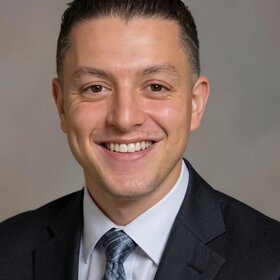
Amir Messadene, founder. Biotechnology engineer (HES-SO Valais-Wallis) with hands-on GMP data integrity experience at Roche and microbial downstream purification at Lonza.
Labionexus delivers instrument-to-LIMS integration for Swiss mid-pharma, biotech and CDMOs, with the qualification documentation your QA needs. Each project is scoped with you before anything is built.
Book a 20-minute discovery call.
Tell us your instrument scope, LIMS environment and CSV requirements. We reply within one business day. No obligation.